Friday, May 8, 2009
Gates, Canon, and the Norton Anthology
This video is a February 27, 1997 interview of Henry Louis Gates Jr., Nellie McKay, and Jamaica Kincaid. As discussed in class and noted in AIT, Gates and McKay are co-editors of the Norton Anthology of African-American Literature. Kincaid is an African-American author whom is included in the anthology.
This interview was taken shortly after the Norton Anthology was released. I found it interesting to hear Gates and McKay talk about the process of creating the work. When asked how they decided which writers to include, they note that the African-American literary tradition is still quite young and that many of those who are most adept are still alive. But still most of the choices were easier to make. Many of the relevant works had already been incorporated into other anthologies – it was just a matter of locating and compiling them. Gates and McKay are aware that they have effectively defined the African American canon with the anthology.
Another interesting topic that arises in the interview pertains to the exclusivity of the African American canon. Some writers wanted to be excluded because they feared being labeled as an African American writer only. Gates and McKay assert that this is not the case and to be considered and African American writer and an American writer are not mutually exclusive.

Tuesday, May 5, 2009
Kennan and Chomsky
George Kennan:
"Public opinion, or what passes for public opinion, is not invariably a moderating force in the jungle of politics. It may be true, and I suspect it is, that the mass of people everywhere are normally peace-loving and would accept many restraints and sacrifices in preference to the monstrous calamities of war. But I also suspect that what purports to be public opinion in most countries that consider themselves to have popular government is often not really the consensus of the feelings of the mass of the people at all, but rather the expression of the interests of special highly vocal minorities — politicians, commentators, and publicity-seekers of all sorts: people who live by their ability to draw attention to themselves and die, like fish out of water, if they are compelled to remain silent."
The sound byte
It seems to me that while George Kennan is often remembered as a major foreign policy architect for the United States, his policy of Containment was not followed by the United States beyond the presidency of Truman. Rollback in Korea and certain military actions in Vietnam and Cambodia seem to me to be major violations of Containment. This sound byte explains some of Kennan's concerns which sound very much like the ideas of Noam Chomsky. Both Kennan and Chomsky warn of the strong influence a small minority have on the decision to go to war especially in the United States. George Kennan's ideas on foreign policy evolved over time and I think it would be beneficial for students to pay attention to much of what Kennan said about war and American diplomacy in his later years.
"Public opinion, or what passes for public opinion, is not invariably a moderating force in the jungle of politics. It may be true, and I suspect it is, that the mass of people everywhere are normally peace-loving and would accept many restraints and sacrifices in preference to the monstrous calamities of war. But I also suspect that what purports to be public opinion in most countries that consider themselves to have popular government is often not really the consensus of the feelings of the mass of the people at all, but rather the expression of the interests of special highly vocal minorities — politicians, commentators, and publicity-seekers of all sorts: people who live by their ability to draw attention to themselves and die, like fish out of water, if they are compelled to remain silent."
The sound byte
It seems to me that while George Kennan is often remembered as a major foreign policy architect for the United States, his policy of Containment was not followed by the United States beyond the presidency of Truman. Rollback in Korea and certain military actions in Vietnam and Cambodia seem to me to be major violations of Containment. This sound byte explains some of Kennan's concerns which sound very much like the ideas of Noam Chomsky. Both Kennan and Chomsky warn of the strong influence a small minority have on the decision to go to war especially in the United States. George Kennan's ideas on foreign policy evolved over time and I think it would be beneficial for students to pay attention to much of what Kennan said about war and American diplomacy in his later years.
The Chipko Movement
This is a video that recounts the Chipko Movement. The Chipko Movement began in India in 1974 in which activists following Gandhian non-violent resistance to prevent deforestation in Uttarakhand by the Indian Forest Service.
This video is particularly interesting becuase it is form the point of view of the women activists who tell the story from their first-hand experience. Their resistance eventually led to a national law prohibiting cutting of trees above 1000m.
The Chipko movement, while not originally a conservation movement, represents one the first organized environmentalist actions in the developing world. In addition, the Chipko movement is said to have coined the term "Tree-hugging" for the way the activists would block loggers from cutting the trees. (See image)

Thursday, April 30, 2009
Allan Bloom on Nietzsche
In 1983 Allan Bloom gave a lecture at Boston College on the importance of Nietzsche in American society. Bloom focused his lecture on how Nietzsche language has become integrated into all aspects of American life. Without knowing the philosophy taxi drivers, janitors, and etc. can be heard using the dark language of Nietzsche. He makes a joke that all the students that enter his office having psychotic breakdowns all start quoting Nietzsche. Bloom is most interested in how America has managed to completely morph Nietzsche's dark viewpoints on the modern democratic man to fit into the American ideals. The Deconstructionism of Nietzsche has allowed America to make his idea of Nihilism into a way to happiness. Americans say to believe in his theory of the chaos unconscious mind but also believe that science can understand the unconscious which is a complete contradiction to Nietzsche's philosophy. The lecture was given 5 years before he published The Closing of the American Mind but many of the points that he would further explore and define are brought up in the lecture. Bloom often refers to his students no longer having any really opinions or beliefs. They esteem to abstract morals, feel what they are told to feel, and do not question what is going on around them. Bloom often brings up his enjoyment of bringing up questions or assigning readings purely to gage the reactions it causes within the students. He has slowly witnessed the bow within us that is strung together by the conflicting ideals of Christianity and Classical Greeks allowing man to shot beyond what he know now disappear within his students. The lecture is very interesting but rather long so you will need to have some free time to listen to it.
You can download it here: http://www.archive.org/details/AllanBloomNietzscheLecture
Wednesday, April 29, 2009
Whose Dome Is It Anyway?

http://www.americanheritage.com/articles/magazine/it/1996/4/1996_4_28.shtml
In the article "Whose Dome is it Anyway?" Alex Soojung-Kim Pang explores the duality of Buckminster Fuller's Geodesic dome. While Fuller is well known for his "Spaceship Earth" ideals of sustainability and environmentalism, and his dome is often associated with communes or other types of alternative housing, his Geodesic dome has firm roots in the military. Though Fuller was a liberal leaning, environmentalist, he felt his working with Marine Corps could help spread the dome as "a tool for victory in both war and peace, a high-tech product for combat areas that could also be made into mass-produced factories, power systems, schools, and hospitals and parachuted into friendly but impoverished Third World countries to create First World industrial powers overnight." Intriguing to see the wide variety of roles the geodesic dome has taken on in the US.
Additionally:
http://www.thirteen.org/sundayarts/buckminster-fuller/146
Very interesting video that touches on Richard Buckminster Fuller's life and career. It contains lots of different seemingly credibly people speaking about Fuller and his work, as well as several clips of Bucky himself talking. Doesn't go into a great deal of depth, but provides interesting overview of his career as well as many images of his work.
Ludwig Wittgenstein.
While not technically an American, he was brought up in class, and I am therefore going to assume he is fair game. Ludwig Wittgenstein was a fascinating thinker and a prodigy by all standards. His thoughts on language are shockingly complicated because they are so eerily simple--language unnecessarily complicates things. In class, we mentioned his idea of the "fruit fly in the bottle;" in this scenario, we are the fruit fly, and language is the bottle, though which we are forced to see the rest of the world in a warped way that is particular to the bottle. It is, of course, undeniable that although language brings us together as a means of communication, it is a hindrance in that we must label things in order to communicate. Wittgenstein, through this argument, is able to belittle philosophy as being almost entirely irrelevant, based solely on a misunderstanding of language. After grappling with the idea for a while, I came to realize that he was right--philosophers endlessly debate the meaning of life, love, happiness, and power, discussions which would all be pointless if we were able to settle on a universal and truthful definition of each of those words.
Derek Jarman's 1993 film Wittgenstein is a thought-provoking medley of short sketches which show Wittgenstein at many different stages of his life, and follow the trajectory of his philosophy of linguistics, among other of his many intellectual triumphs. While it is rather long and extremely biographical, the sketches of Wittgenstein at Cambridge are useful in attemptig to understand the specifics of his philosophy, and how we should interact with it.
Derek Jarman's 1993 film Wittgenstein is a thought-provoking medley of short sketches which show Wittgenstein at many different stages of his life, and follow the trajectory of his philosophy of linguistics, among other of his many intellectual triumphs. While it is rather long and extremely biographical, the sketches of Wittgenstein at Cambridge are useful in attemptig to understand the specifics of his philosophy, and how we should interact with it.
Susan Sontag: Camp Art and Postmodernism
by Katherine Hayes
American intellectual and author Susan Sontag was born in New York City in 1933. Sontag began writing at a time in American history when high and low class was converging. The political and intellectual climate of the 1960’s and 1970’s allowed her to cultivate her ideas and demonstrated her talent for addressing the social changes of the time. This time period reflected a change in American culture and thought. The radicalization of the college students and protest of the Vietnam War allowed for a more liberal media. Even during these more liberal times Sontag came under criticism for a visit to North Vietnam. Her sympathetic portrayal of the North Vietnamese people earned her criticism from groups that supported the war. Similarly, Sontag earned criticism after publishing her views on the September 11th attacks. During her career as an intellectual and writer Sontag became a kind of celebrity. The cultural climate of New York City at this time introduced Sontag to the leading intellectuals of the world at this time. Sontag was educated at the University of Chicago and Harvard. It was at the University of Chicago that she met her husband, Philip Rieff. Sontag and Rieff divorced in 1958 after the birth of their son David. It may have been because of her marriage and child that Sontag’s career did not begin until she was thirty. Her career began with a work of fiction entitled The Benefactor. Although Sontag is mainly thought of as an essayist, she thought of herself primarily as a writer of fiction. One of Sontag’s most famous works is her collection of essays entitled Against Interpretation, published in 1966. This collection was enormously popular around the world. Sontag offered a new way of viewing art that strayed from the traditional interpretation. She believed that people needed to focus on the individual art and its contents rather then the usual interpretations of high art. This allowed for the appreciation of “lower class” forms of art. Sontag focused on what the art was rather than focusing on what the art meant. Sontag’s criticism of the way people viewed art is perhaps her most defining and popular idea. Although Susan Sontag died in December 2004, her ideas survive in today’s culture. 1
In 1964 Sontag published Notes on Camp in the Partesian Review. This essay has become one of her best-known pieces of work. It is contained in her collection of essays, Against Interpretation. Sontag centers her argument around fifty-eight bullet points. Each bullet point can be seen as mini-theses about camp. In the essay Sontag gives new meaning to the term camp. As a result of her essay, Sontag helped to make the appreciation of camp socially acceptable.
Sontag defines camp by stating, “Camp is a certain mode of aestheticism. It is one way of seeing the world as an aesthetic phenomenon. That way, the way of Camp, is not in terms of beauty, but in terms of the degree of artifice.”2 Sontag’s definition of camp and the essay itself brought the appreciation of camp into mainstream thought. Liam Kennedy states, “In the culturally saturated, affluent society camp offers a survival of style. Camp is not mass culture, rather it is an aesthetic lens through which to view mass culture, and a highly discriminating lens at that.”3 Before this essay appreciation of camp art was almost nonexistent. A person who enjoyed camp art would be ridiculed by their peers for their poor taste in art. However, with this essay camp the appreciation of art as a legitimate art form. Sontag bases much of her argument on personal taste. Notes on Camp also had a profound effect on the careers of many artists and filmmakers, most notably Andy Warhol.

His campy style of art became socially acceptable and gained mass appeal after the publication of this essay. Today, Warhol’s art continues to be one of the defining examples of camp. In addition to addressing the tastes of all people, Sontag also addressed the campy tastes of gay men. She states “ 51. The peculiar relation between Camp taste and homosexuality has to be explained. While it’s not true that Camp taste is homosexual taste, there is no doubt a peculiar affinity and overlap…So, not all homosexuals have Camp taste. But homosexuals, by and large, constitute the vanguard and the most articulate audience of Camp.”4 This essay was written during a time of sexual revolution in the 1960’s. Sontag sees the gay men of this time, especially in New York City, being one of the most important groups in the camp art world. While the appreciation of camp art is not shared by all people of this group, Sontag helped to make camp art an important part of culture.5
In her essay Sontag gives the reader some examples of what she thinks is camp.
4. Random examples of items which are part of the canon of camp:
Zuleika Dobson
Tiffany lamps
Scopitone films
The Brown Derby restaurant on Sunset Boulevard in LA
The Enquirer, headlines and stories
Aubrey Beardsley drawings
Swan Lake
Bellini's operas
Visconti's direction of Salome and 'Tis Pity She's a Whore
certain turn-of-the-century picture postcards
Schoedsack's King Kong
the Cuban pop singer La Lupe
Lynn Ward's novel in woodcuts, God's Man
the old Flash Gordon comics
women's clothes of the twenties (feather boas, fringed and beaded dresses, etc.)
the novels of Ronald Firbank and Ivy Compton-Burnett
stag movies seen without lust6
The idea of postmodernism developed during the 1970’s. The turmoil of the 1960’s had led to a redevelopment of modern culture. Postmodernism was developed as a reaction to modernism. Elements of postmodernism are most often seen in art, architecture, and literature. Camp is an important part of postmodern culture. Angela McRobbie states “…since the mid-1960’s camp has also provided a momentum for the creation of postmodern culture, where the boundaries of high and low art are irrevocably blurred and where camp detaches itself from the subcultural world of the gay scene and enters into mainstream, roaming free in the field of popular entertainment, while retaining an affectionate attachment to gay culture.”7 Sontag’s essay on camp is an important piece of postmodern culture. One of the main points of this essay is that it is not important why a person views something as art. The persons individual choice in taste is important to postmodernists. However, postmodernists do not need to see art as a part of the larger picture. They are able to look at art for what it is itself and not for the message it is trying to send society. Postmodernists do not look at the big picture as a whole; rather they look at many small things that comprise the larger picture. Susan Sontag is an important part of postmodernism. Although the term developed after her essay Notes on Camp it was an ideal way of describing Sontag’s views.8
This video is an interesting interview between Sontag and Philip Johnson. They are touring the Seagram building in New York City. Philip Johnston helped to design this building. The Seagram building is a classic example of modern architecture. It was completed in 1958 and was one of the most expensive building projects of the time. The Seagram building is one of many buildings that featured modern architecture in New York City at this time. It is interesting to see Sontag interview Johnson because her work has become one of the greatest examples of postmodernism. Modern architecture stands in contrast to the camp styles of art that Sontag writes about. Modern architecture features a very minimalist uniform design, while camp art is often the exact opposite. Sontag states that “25. The hallmark of Camp is the Spirit of extravagance. Camp is a woman walking around in a dress made of three million feathers…Gaudi’s lurid and beautiful buildings in Barcelona are camp not only because of their style but because of what they reveal-most notably in the Cathedral of the Sagrada Familia- the ambition on the part of one man to do what it takes a generation, a whole culture to accomplish.”9 While the Seagram building contains extravagant materials in its interior, it does not possess any of the fun qualities of camp. The Cathedral of the Sagrada Familia however stands in stark contrast to the Seagram building. The Cathedral is one of the best examples of Camp architecture.
Your browser may not support display of this image.
This clip features an interview with Susan Sontag and Filmmaker Agnes Varda. This is a good example of a 1970’s era TV show. In this clip Sontag speaks about film and the reality of film. She argues that in film people are perceived the way the director wants them to be seen rather then they way they actually would act in society. This is an important idea for Sontag and it ties into her ideas about camp. For Sontag the realness of a character is important. This is an important idea in camp art. Camp art is traditionally very real. Also, camp art is imperfect by nature and focuses on they way everyone sees something, rather then just one persons idea of how something should be seen.
Susan Sontag became a major cultural icon during the 1960’s and remains an icon today. She was able to transform culture in a way that no other author did with her essay Notes on Camp. This essay proved to be one of the defining examples of her career. With this essay Sontag was able to unite high and low culture. It is clear from the essay that Sontag believes that a person can appreciate both high and low forms of art. This essay made it socially acceptable to enjoy camp works of art. With this essay Susan Sontag helped to bring about a new definition of art and helped to bring postmodern ideas to mainstream society.
Works Cited
Kennedy, Liam. Susan Sontag Mind As Passion. New York: Palgrave Macmillan, 1997.
McRobbie, Angela. Postmodernism and Popular Culture. New York: Routledge, 1994.
Rollyson, Carl E. Susan Sontag the making of an icon. New York: W.W. Norton, 2000.
Sontag, Susan. Against Interpretation And Other Essays. New York: Picador, 2001.
American intellectual and author Susan Sontag was born in New York City in 1933. Sontag began writing at a time in American history when high and low class was converging. The political and intellectual climate of the 1960’s and 1970’s allowed her to cultivate her ideas and demonstrated her talent for addressing the social changes of the time. This time period reflected a change in American culture and thought. The radicalization of the college students and protest of the Vietnam War allowed for a more liberal media. Even during these more liberal times Sontag came under criticism for a visit to North Vietnam. Her sympathetic portrayal of the North Vietnamese people earned her criticism from groups that supported the war. Similarly, Sontag earned criticism after publishing her views on the September 11th attacks. During her career as an intellectual and writer Sontag became a kind of celebrity. The cultural climate of New York City at this time introduced Sontag to the leading intellectuals of the world at this time. Sontag was educated at the University of Chicago and Harvard. It was at the University of Chicago that she met her husband, Philip Rieff. Sontag and Rieff divorced in 1958 after the birth of their son David. It may have been because of her marriage and child that Sontag’s career did not begin until she was thirty. Her career began with a work of fiction entitled The Benefactor. Although Sontag is mainly thought of as an essayist, she thought of herself primarily as a writer of fiction. One of Sontag’s most famous works is her collection of essays entitled Against Interpretation, published in 1966. This collection was enormously popular around the world. Sontag offered a new way of viewing art that strayed from the traditional interpretation. She believed that people needed to focus on the individual art and its contents rather then the usual interpretations of high art. This allowed for the appreciation of “lower class” forms of art. Sontag focused on what the art was rather than focusing on what the art meant. Sontag’s criticism of the way people viewed art is perhaps her most defining and popular idea. Although Susan Sontag died in December 2004, her ideas survive in today’s culture. 1
In 1964 Sontag published Notes on Camp in the Partesian Review. This essay has become one of her best-known pieces of work. It is contained in her collection of essays, Against Interpretation. Sontag centers her argument around fifty-eight bullet points. Each bullet point can be seen as mini-theses about camp. In the essay Sontag gives new meaning to the term camp. As a result of her essay, Sontag helped to make the appreciation of camp socially acceptable.
Sontag defines camp by stating, “Camp is a certain mode of aestheticism. It is one way of seeing the world as an aesthetic phenomenon. That way, the way of Camp, is not in terms of beauty, but in terms of the degree of artifice.”2 Sontag’s definition of camp and the essay itself brought the appreciation of camp into mainstream thought. Liam Kennedy states, “In the culturally saturated, affluent society camp offers a survival of style. Camp is not mass culture, rather it is an aesthetic lens through which to view mass culture, and a highly discriminating lens at that.”3 Before this essay appreciation of camp art was almost nonexistent. A person who enjoyed camp art would be ridiculed by their peers for their poor taste in art. However, with this essay camp the appreciation of art as a legitimate art form. Sontag bases much of her argument on personal taste. Notes on Camp also had a profound effect on the careers of many artists and filmmakers, most notably Andy Warhol.

His campy style of art became socially acceptable and gained mass appeal after the publication of this essay. Today, Warhol’s art continues to be one of the defining examples of camp. In addition to addressing the tastes of all people, Sontag also addressed the campy tastes of gay men. She states “ 51. The peculiar relation between Camp taste and homosexuality has to be explained. While it’s not true that Camp taste is homosexual taste, there is no doubt a peculiar affinity and overlap…So, not all homosexuals have Camp taste. But homosexuals, by and large, constitute the vanguard and the most articulate audience of Camp.”4 This essay was written during a time of sexual revolution in the 1960’s. Sontag sees the gay men of this time, especially in New York City, being one of the most important groups in the camp art world. While the appreciation of camp art is not shared by all people of this group, Sontag helped to make camp art an important part of culture.5
In her essay Sontag gives the reader some examples of what she thinks is camp.
4. Random examples of items which are part of the canon of camp:
Zuleika Dobson
Tiffany lamps
Scopitone films

The Brown Derby restaurant on Sunset Boulevard in LA
The Enquirer, headlines and stories
Aubrey Beardsley drawings

Swan Lake
Bellini's operas
Visconti's direction of Salome and 'Tis Pity She's a Whore
certain turn-of-the-century picture postcards
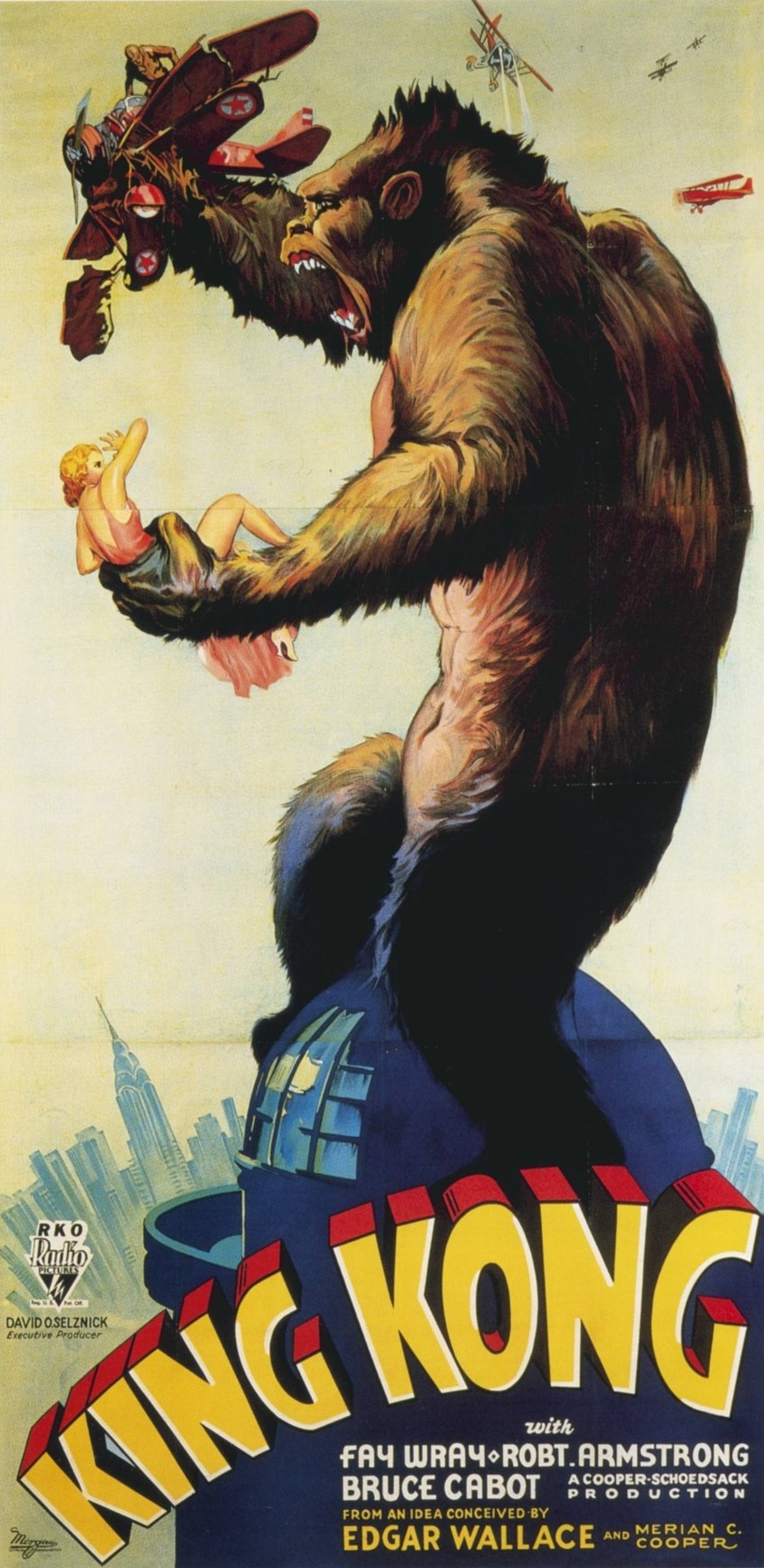
Schoedsack's King Kong
the Cuban pop singer La Lupe
Lynn Ward's novel in woodcuts, God's Man
the old Flash Gordon comics
women's clothes of the twenties (feather boas, fringed and beaded dresses, etc.)
the novels of Ronald Firbank and Ivy Compton-Burnett
stag movies seen without lust6
The idea of postmodernism developed during the 1970’s. The turmoil of the 1960’s had led to a redevelopment of modern culture. Postmodernism was developed as a reaction to modernism. Elements of postmodernism are most often seen in art, architecture, and literature. Camp is an important part of postmodern culture. Angela McRobbie states “…since the mid-1960’s camp has also provided a momentum for the creation of postmodern culture, where the boundaries of high and low art are irrevocably blurred and where camp detaches itself from the subcultural world of the gay scene and enters into mainstream, roaming free in the field of popular entertainment, while retaining an affectionate attachment to gay culture.”7 Sontag’s essay on camp is an important piece of postmodern culture. One of the main points of this essay is that it is not important why a person views something as art. The persons individual choice in taste is important to postmodernists. However, postmodernists do not need to see art as a part of the larger picture. They are able to look at art for what it is itself and not for the message it is trying to send society. Postmodernists do not look at the big picture as a whole; rather they look at many small things that comprise the larger picture. Susan Sontag is an important part of postmodernism. Although the term developed after her essay Notes on Camp it was an ideal way of describing Sontag’s views.8
This video is an interesting interview between Sontag and Philip Johnson. They are touring the Seagram building in New York City. Philip Johnston helped to design this building. The Seagram building is a classic example of modern architecture. It was completed in 1958 and was one of the most expensive building projects of the time. The Seagram building is one of many buildings that featured modern architecture in New York City at this time. It is interesting to see Sontag interview Johnson because her work has become one of the greatest examples of postmodernism. Modern architecture stands in contrast to the camp styles of art that Sontag writes about. Modern architecture features a very minimalist uniform design, while camp art is often the exact opposite. Sontag states that “25. The hallmark of Camp is the Spirit of extravagance. Camp is a woman walking around in a dress made of three million feathers…Gaudi’s lurid and beautiful buildings in Barcelona are camp not only because of their style but because of what they reveal-most notably in the Cathedral of the Sagrada Familia- the ambition on the part of one man to do what it takes a generation, a whole culture to accomplish.”9 While the Seagram building contains extravagant materials in its interior, it does not possess any of the fun qualities of camp. The Cathedral of the Sagrada Familia however stands in stark contrast to the Seagram building. The Cathedral is one of the best examples of Camp architecture.

Your browser may not support display of this image.
This clip features an interview with Susan Sontag and Filmmaker Agnes Varda. This is a good example of a 1970’s era TV show. In this clip Sontag speaks about film and the reality of film. She argues that in film people are perceived the way the director wants them to be seen rather then they way they actually would act in society. This is an important idea for Sontag and it ties into her ideas about camp. For Sontag the realness of a character is important. This is an important idea in camp art. Camp art is traditionally very real. Also, camp art is imperfect by nature and focuses on they way everyone sees something, rather then just one persons idea of how something should be seen.
Susan Sontag became a major cultural icon during the 1960’s and remains an icon today. She was able to transform culture in a way that no other author did with her essay Notes on Camp. This essay proved to be one of the defining examples of her career. With this essay Sontag was able to unite high and low culture. It is clear from the essay that Sontag believes that a person can appreciate both high and low forms of art. This essay made it socially acceptable to enjoy camp works of art. With this essay Susan Sontag helped to bring about a new definition of art and helped to bring postmodern ideas to mainstream society.
Works Cited
Kennedy, Liam. Susan Sontag Mind As Passion. New York: Palgrave Macmillan, 1997.
McRobbie, Angela. Postmodernism and Popular Culture. New York: Routledge, 1994.
Rollyson, Carl E. Susan Sontag the making of an icon. New York: W.W. Norton, 2000.
Sontag, Susan. Against Interpretation And Other Essays. New York: Picador, 2001.
The Smithsonian: A Culture War Battleground

''Secure in tenure, they now serve up, in our museums and colleges, a constant diet of the same poison of anti-Americanisms on which they themselves were fed. Ultimate goal: Breed a generation of Americans who accept the Left's indictment of our country. For any nation to subsidize such assaults upon its history is to toy with suicide. But for Americans, whose history is so full of greatness and glory, it is criminal cowardice.”
-Pat Buchanan on the Enola Gay Exhibit
In the 1990s, the Culture Wars emerged on an unexpected stage: the Smithsonian Institute. In 1994, the Smithsonian’s National Air and Space Museum designed an exhibit to commemorate the 50th anniversary of the atomic bombs dropped on Hiroshima and Nagasaki, refinishing the legendary Enola Gay B-52 bomber as the focal point of the exhibit. The ensuing debate over the contents and message of the exhibit aroused zealous and emotional responses from Right and Left-wing groups all of the United States. Whereas the museum historians wanted to discuss the various political motivations behind Truman’s decision, the physical destruction at Hiroshima and Nagasaki, and the ensuing nuclear arms race between the U.S. and the Soviet Union, right-wing American’s screamed that the great American motivation “to save thousands of American lives” was completely ignored by “revisionist historians.” Here, Richard Kohn explores the dimensions of the Enola Gay controversy and describes how the political culture wars affected the debate over historical interpretation. Kohn warns that in the Culture Wars, not even museums, educators, or historians are allowed to deviate from the traditional American narrative.
-Pat Buchanan on the Enola Gay Exhibit
In the 1990s, the Culture Wars emerged on an unexpected stage: the Smithsonian Institute. In 1994, the Smithsonian’s National Air and Space Museum designed an exhibit to commemorate the 50th anniversary of the atomic bombs dropped on Hiroshima and Nagasaki, refinishing the legendary Enola Gay B-52 bomber as the focal point of the exhibit. The ensuing debate over the contents and message of the exhibit aroused zealous and emotional responses from Right and Left-wing groups all of the United States. Whereas the museum historians wanted to discuss the various political motivations behind Truman’s decision, the physical destruction at Hiroshima and Nagasaki, and the ensuing nuclear arms race between the U.S. and the Soviet Union, right-wing American’s screamed that the great American motivation “to save thousands of American lives” was completely ignored by “revisionist historians.” Here, Richard Kohn explores the dimensions of the Enola Gay controversy and describes how the political culture wars affected the debate over historical interpretation. Kohn warns that in the Culture Wars, not even museums, educators, or historians are allowed to deviate from the traditional American narrative.
DDT toxicity: the current science

If you're looking for the current consensus among biologists and health experts on the toxicity and carcinogenic potential of DDT, here is a good place to start. If you're looking for a spirited rebuttal to the ad hominem attacks on Carson's credibility as a scientist and conservationist, check here. And, finally, if you'd like to see review the recent discourse among environmentalists on the carefully targeted use of DDT to fight malaria, check here.
Reinhold Niebuhr and Religion in America
http://www.hrc.utexas.edu/multimedia/video/2008/wallace/niebuhr_reinhold.html
In this interview with Mike Wallace in 1958, Reinhold Niebuhr discusses religion in the pluralistic society of America. Wallace asks Niebuhr if a separation between Church and State is necessary if religion is good for society. Niebuhr responds that if religion is good, then the state should not intervene with it, but if religion is bad, meaning it gives ultimate sanctity to a particular cause, then it must not interfere with the state. Wallace then proceeds to ask Niebuhr if the Roman Catholic Church infringes upon civil liberties in America, since they are against birth control and divorce. Neibuhr answers that Roman Catholics have the right to enforce a standard within their own community, but that the Roman Catholic Church does not have the right to enforce its conception of divorce and birth control upon secular people. Not every standard of every church is a good standard for society in general, an issue that, as Niebuhr states, is a major issue in a democratic and pluralistic society that must be resolved by dealing with the policies and attitudes of all groups in a utilitarian matter.
In this interview with Mike Wallace in 1958, Reinhold Niebuhr discusses religion in the pluralistic society of America. Wallace asks Niebuhr if a separation between Church and State is necessary if religion is good for society. Niebuhr responds that if religion is good, then the state should not intervene with it, but if religion is bad, meaning it gives ultimate sanctity to a particular cause, then it must not interfere with the state. Wallace then proceeds to ask Niebuhr if the Roman Catholic Church infringes upon civil liberties in America, since they are against birth control and divorce. Neibuhr answers that Roman Catholics have the right to enforce a standard within their own community, but that the Roman Catholic Church does not have the right to enforce its conception of divorce and birth control upon secular people. Not every standard of every church is a good standard for society in general, an issue that, as Niebuhr states, is a major issue in a democratic and pluralistic society that must be resolved by dealing with the policies and attitudes of all groups in a utilitarian matter.
"Culture Wars? How 2004."
He agrees entirely that during Bush's election, the issue surrounding moral values not only surfaced, but was the center of discussion.
What's interesting about this particular article is that it claims we are now at the end of such an era. That over-shadowing issues (like the Economic crisis in our time or the Great Depression in Hoover's) make our moral discussions "less pressing." They can be set aside for later discussion after the issues at hand are solved. It's as though when things need to be solved, we're able to focus on the larger picture.
His claim seems to make perfect sense but makes us question if it's valid. As hopeful as we are that when a crisis comes along similar to the one we're in we're able to set aside bickering, it seems as though 2009 is not a total departure from such issues. But just as Dionne can look back on Prohibition and the Depression, we too will look back and see if we successfully navigated through our time.
The Harvardman's Canon (or lack thereof)
"Nick Carraway explains in The Great Gatsby—which I read because my high school and the writers of the Advanced Placement English Literature and Composition test luckily did believe in Great Books—that he is going to take up a heavy reading schedule so that he can become “that most limited of all specialists, the ‘well-rounded man.’ It is embarrassing that Harvard believes a medley of irrelevancies will prepare students for “life beyond college,” and even more embarrassing that the financial crisis is used as an excuse to stop investigating the serious idea that Great Books have a place in undergraduate education. "
http://www.thecrimson.com/article.aspx?ref=527921
In an column in this week's Harvard Crimson, a Harvard student condemns Harvard lackluster attempt to modernize their general education, or core, classes. Calling it a game of semantics, Kiran R, Pendri, the columnist criticizes Harvard creating more politically correct course names without setting out guidelines for the type of classes should take. Like many who support a literary canon, Pendri says, "Deeply troubling and extremely questionable, this recent development suggests that the administration is not at all serious about rethinking what ought to constitute a liberal education" because it does not prepare students for a life in academia by teaching James, Mill, or Camus but instead Japanese Pop Culture. His solution: recognize that there is a canon that is worth knowing.
It seems that rejection of the canon has become less about including minority voices to create a more complete, worldly view through literary education and more about allowing students to persue their own interests. This is viable to a degree, but it puts a trust in the student that he/she wants to learn, not just get an easy A. Whether one agrees with the canon or not, it still exists and is still important to many people, and students are still expected to know the "greats" after college, even if they weren't required to learn them.
http://www.thecrimson.com/article.aspx?ref=527921
In an column in this week's Harvard Crimson, a Harvard student condemns Harvard lackluster attempt to modernize their general education, or core, classes. Calling it a game of semantics, Kiran R, Pendri, the columnist criticizes Harvard creating more politically correct course names without setting out guidelines for the type of classes should take. Like many who support a literary canon, Pendri says, "Deeply troubling and extremely questionable, this recent development suggests that the administration is not at all serious about rethinking what ought to constitute a liberal education" because it does not prepare students for a life in academia by teaching James, Mill, or Camus but instead Japanese Pop Culture. His solution: recognize that there is a canon that is worth knowing.
It seems that rejection of the canon has become less about including minority voices to create a more complete, worldly view through literary education and more about allowing students to persue their own interests. This is viable to a degree, but it puts a trust in the student that he/she wants to learn, not just get an easy A. Whether one agrees with the canon or not, it still exists and is still important to many people, and students are still expected to know the "greats" after college, even if they weren't required to learn them.
Just not in my Backyard
http://proquest.umi.com.ezproxy.bu.edu/pqdweb?index=2&did=1630386312&SrchMode=1&sid=3&Fmt=10&VInst=PROD&VType=PQD&RQT=309&VName=HNP&TS=1241009213&clientId=3740
The article titled "W.H.O. Supports Wider Use of DDT to Combat Malaria" by Celia W. Dugger was published on September 16, 2006 by the New York Times. In the article, Dugger examines how the World Health Organization, at the persistence of its leader Dr. Arata Kochl, supports a policy of spraying small amounts of DDT inside African homes to combat malaria.
She notes that this was a controversial decision that led to internal conflict within the W.H.O but was supported by the Bush administration.
She also writes that the publication of Silent Spring created an environmental movement that caused DDT to become illegal in the United States. It's interesting to see how a pesticide that has been considered extremely dangerous in America (it kills animal and plant species and causes genetic defects in humans) can by sprayed inside of African homes.
The article titled "W.H.O. Supports Wider Use of DDT to Combat Malaria" by Celia W. Dugger was published on September 16, 2006 by the New York Times. In the article, Dugger examines how the World Health Organization, at the persistence of its leader Dr. Arata Kochl, supports a policy of spraying small amounts of DDT inside African homes to combat malaria.
She notes that this was a controversial decision that led to internal conflict within the W.H.O but was supported by the Bush administration.
She also writes that the publication of Silent Spring created an environmental movement that caused DDT to become illegal in the United States. It's interesting to see how a pesticide that has been considered extremely dangerous in America (it kills animal and plant species and causes genetic defects in humans) can by sprayed inside of African homes.
Pat Buchanan Culture Wars Speech
I found this speech striking. Here in 1992 Pat Buchanan, a right-winged republican speaks of George Bush as a proper candidate for President (to serve a second term). He talks of the wide gap between the conservative right and liberal left. He speaks of freedom and refuses to allow for dissent from the liberal bias.
While this is all well and good (also proper because these ideals are protected by out Constitution) yet it opened my eyes. I have seen how far the Republican Party has come. In this speech, Buchanan openly bashes the gay community, liberals, and radical feminism. This might just be my opinion but now while the Republican Party still might house these ideals, they are less openly discussed and freely opposed.
Is this the changing of the Republican Party? Do the warring beliefs morph over time?
Another thing that is worth noting is that vocal performance by the audience. I have always assumed that vocalism was exhibited by the liberal left. However, this phenomena is found in all people, not just in the progressive left.
http://www.youtube.com/watch?v=iO5_1ps5CAc&feature=PlayList&p=B3AA9D15220FC23C&playnext=1&playnext_from=PL&index=16
http://www.youtube.com/watch?v=pICypNXHKbg&feature=related
http://www.youtube.com/watch?v=lstA7j5fmio&feature=related
http://www.youtube.com/watch?v=QO2wzdOCqr8&feature=related
There are 4 parts.
While this is all well and good (also proper because these ideals are protected by out Constitution) yet it opened my eyes. I have seen how far the Republican Party has come. In this speech, Buchanan openly bashes the gay community, liberals, and radical feminism. This might just be my opinion but now while the Republican Party still might house these ideals, they are less openly discussed and freely opposed.
Is this the changing of the Republican Party? Do the warring beliefs morph over time?
Another thing that is worth noting is that vocal performance by the audience. I have always assumed that vocalism was exhibited by the liberal left. However, this phenomena is found in all people, not just in the progressive left.
http://www.youtube.com/watch?v=iO5_1ps5CAc&feature=PlayList&p=B3AA9D15220FC23C&playnext=1&playnext_from=PL&index=16
http://www.youtube.com/watch?v=pICypNXHKbg&feature=related
http://www.youtube.com/watch?v=lstA7j5fmio&feature=related
http://www.youtube.com/watch?v=QO2wzdOCqr8&feature=related
There are 4 parts.
The End of the Culture Wars...
... or at least the end of current battles. Fivethirtyeight.com is a website that analyzes opinion polling, and gained fame after being the most accurate predictor of the 2008 election. Click here and here.
These are aggregates of polls about marijuana use and support for gay marriage. The war on drugs and same-sex marriage are wedge issues in American politics and embody the current culture wars, but vehement opposition seems to be falling. Among younger people especially, socially liberal politics are mainstream and trending away from reactionaries in the conservative movement.
Good news for Democrats, as they are positioned philosophically for even greater party affiliation (over 10 percentage points already). It will be many years before Republicans drop abortion, homosexuals, religion, et al. from their agenda to reconnect with the majority of citizens.
These are aggregates of polls about marijuana use and support for gay marriage. The war on drugs and same-sex marriage are wedge issues in American politics and embody the current culture wars, but vehement opposition seems to be falling. Among younger people especially, socially liberal politics are mainstream and trending away from reactionaries in the conservative movement.
Good news for Democrats, as they are positioned philosophically for even greater party affiliation (over 10 percentage points already). It will be many years before Republicans drop abortion, homosexuals, religion, et al. from their agenda to reconnect with the majority of citizens.
Tuesday, April 28, 2009
Allan Bloom and The Culture Wars
I found this interview with Allan Bloom, the author of The Closing of the American Mind to be very interesting. Bloom argues that modernism is not enough to make someone truly educated, and that universities should return to a focus on the classics. Even though Bloom's book was adopted by many conservatives of his time, Bloom claims that his book is not as politically divisive as many people make it out to be. I find it ironic that Bloom is very critical of the focus on the idea of values, as the word has been shaped by Nietzsche, as opposed to questions of good and evil. It seems like Bloom would disagree with many of the values focused
conservatives who supported him.
The Future of Feminism
When we discussed feminism in class, the idea that there isn’t a clear future for the feminist movement came up. It was mentioned that perhaps the future of feminism will be more international as most causes for feminist activism in the United States either no longer exist or are not worth pursuing. This article addresses the question of how young women view feminism and its future. The general idea that many young women (and probably men) do not have strong feelings regarding feminism and perhaps do not completely understand the purpose of feminism is prevalent in the article and I think, seemed to be the general consensus in class. I think what is interesting about the feminist movement is that it was once such passionate cause and is now either mocked or regarded with apathy. While the intensity many social movements often dies down over time, most causes are still considered respectable in a way that feminism is not. I think this either calls for the abandonment of feminism or a complete transformation of the purpose of the feminist movement.
Gunnar Myrdal: An American Dilemma
Although Gunnar Myrdal is not an American he, like Tocqueville, offered much insight into American culture and society. Myrdal wrote about race relations in the United States. In his "An American Dilemma," Myrdal writes of the North's disillusionment with the South's treatment of African Americans.
Myrdal writes, "The Northerner does not have his social conscience and all his political thinking permeated with the Negro problem as the Southerner does. Rather, he succeeds in forgetting about it most of the time. The Northern newspapers help him by minimizing all Negro news, except crime news. The Northerners want to hear as little as possible...The result is an astonishing ignorance about the Negro on the part of the white public in the North." Myrdal argues that the North and the federal government were completely ignorant towards the racism and the Jim Crow aspect of the South.
It was Myrdal's writing on segregation and the potential causes and methods of a future civil rights movement that influenced many journalists, judges, and lawyers to pursue race equality. Myrdal's book helped the Supreme Court find factual information for their reason for overturning Plessy vs. Fergusion.
It was Myrdal's writing that influenced the Supreme Court to integrate, Civil Rights leaders to demonstrate, and journalists to report on more than just African American crime. Myrdal heavily influenced the Civil Rights Movement and was the foundation of many American intellectuals.
Here is a link to some passages from Myrdal's book, "An American Dilemma."
http://books.google.com/books?id=VH0SFTzWdokC&dq=Gunnar+Myrdal&printsec=frontcover&source=an&hl=en&ei=8sT3SdnyE8OLtgezovjBDw&sa=X&oi=book_result&ct=result&resnum=4#PPP1,M1
Myrdal writes, "The Northerner does not have his social conscience and all his political thinking permeated with the Negro problem as the Southerner does. Rather, he succeeds in forgetting about it most of the time. The Northern newspapers help him by minimizing all Negro news, except crime news. The Northerners want to hear as little as possible...The result is an astonishing ignorance about the Negro on the part of the white public in the North." Myrdal argues that the North and the federal government were completely ignorant towards the racism and the Jim Crow aspect of the South.
It was Myrdal's writing on segregation and the potential causes and methods of a future civil rights movement that influenced many journalists, judges, and lawyers to pursue race equality. Myrdal's book helped the Supreme Court find factual information for their reason for overturning Plessy vs. Fergusion.
It was Myrdal's writing that influenced the Supreme Court to integrate, Civil Rights leaders to demonstrate, and journalists to report on more than just African American crime. Myrdal heavily influenced the Civil Rights Movement and was the foundation of many American intellectuals.
Here is a link to some passages from Myrdal's book, "An American Dilemma."
http://books.google.com/books?id=VH0SFTzWdokC&dq=Gunnar+Myrdal&printsec=frontcover&source=an&hl=en&ei=8sT3SdnyE8OLtgezovjBDw&sa=X&oi=book_result&ct=result&resnum=4#PPP1,M1
Rachel Carson vs Dick Tavern
http://www.guardian.co.uk/education/2005/feb/18/highereducation.uk
Above is link to an article by Dick Tavern from 2005. In his article he tells the reader that Rachel Carson may have had good intentions when writing her book "Silent Spring", but that the outcome of her book was negative. In "Silent Spring" Carson writes that DDT caused cancer and liver damage, but Tavern claims that there is no evidence to support her claim. Tavern goes on to say that "DDT is the most effective agent ever invented for preventing insect-borne disease, which, according to the US National Academy of Sciences and the WHO, prevented over 50 million human deaths from malaria in about two decades." He is upset that Carson's influence and what he calls "careless science" has prevented DDT from helping stop disease for people that need it.
I thought it was interesting to find an article that criticizes "Silent Spring", especially in 2005. Also, Tavern claims that Carson's claims lacked support. I wonder if Tavern was just attempting to hurt Carson's cause or is he correct. I attempted to find the truth and I found articles that supported both sides; however, I do find it hard to believe that Carson would have made claims that she had no support for.
Culture Wars in Urban Society
I thought the book Yo' mama's disfunktional!: Fighting the Culture Wars in Urban America by Robin D. G. Kelley was an interesting spin on the culture wars we had been discussing in class. In the fist chapter, he addresses the problem of minority literature in that people tend to generalize it and not analyze it's meaning properly.
"My purpose, then, is to offer some reflections on how the culture concept employed by social scientists has severely impoverished contemporary debates over the plight of urban African Americans and contributed to the construction of the ghetto as a resevoir of pathologies and bad cultural values. ... While some aspects of black expressive cultures certainly help inner city residents deal with and even resist ghetto conditions, most of the literature ignores what cultural forms mean for the practitioners. Few scholars acknowledge that what also might be at stake here are aesthetics, style, and pleasure."
Although I couldn't read all of it, I thought the urban point of view showed more than just culture wars in terms of the literary canon. The chapter I found most interesting was the fifth one, How the New Working Class Can Transform America, because it gives insight into culture wars beyond academia how the face of the working class is shifting.
http://books.google.com/books?hl=en&lr=&id=1gl4RP__PTEC&oi=fnd&pg=PA15&dq=culture+wars&ots=dAOhcdg31i&sig=qwV5w-862U3_yvsyIbpbLgGWJ0k#PPP1,M1
(P.S. I apologize for the profanity in Chapter 1, I couldn't get the site to load with the cover first...)
"My purpose, then, is to offer some reflections on how the culture concept employed by social scientists has severely impoverished contemporary debates over the plight of urban African Americans and contributed to the construction of the ghetto as a resevoir of pathologies and bad cultural values. ... While some aspects of black expressive cultures certainly help inner city residents deal with and even resist ghetto conditions, most of the literature ignores what cultural forms mean for the practitioners. Few scholars acknowledge that what also might be at stake here are aesthetics, style, and pleasure."
Although I couldn't read all of it, I thought the urban point of view showed more than just culture wars in terms of the literary canon. The chapter I found most interesting was the fifth one, How the New Working Class Can Transform America, because it gives insight into culture wars beyond academia how the face of the working class is shifting.
http://books.google.com/books?hl=en&lr=&id=1gl4RP__PTEC&oi=fnd&pg=PA15&dq=culture+wars&ots=dAOhcdg31i&sig=qwV5w-862U3_yvsyIbpbLgGWJ0k#PPP1,M1
(P.S. I apologize for the profanity in Chapter 1, I couldn't get the site to load with the cover first...)
Subscribe to:
Posts (Atom)